
Two worlds at once
After 153 days of reserve duty, I turned in my gun and came home. Everyone asks how I’m readjusting. The person in my house who had the harder job is my wife.
For five months she lived in two worlds. In the first, life ran as usual: work, errands, dinner, the bills. In the second, she waited for a short message saying I was back from Gaza. She watched alerts pop up for the south, knowing I was somewhere on that border, and sometimes went hours without hearing from me. Many miluim wives go days. During those stretches, every call from an unknown number and every car that slows down outside the house makes a heart stop for a second.
People ask how she’s doing. She smiles and says, “We’re managing, baruch Hashem.” The honest answer is too heavy for the supermarket line.
The weekdays are the hard part
Thank God, the Shabbat invitations were plentiful, and my wife was grateful for every one. On the weekend, everyone is together.
The weekdays were another story. Nobody sets a Shabbat table for you on a Tuesday. Sunday through Thursday, she carried the house alone. Our kids are teenagers, and between work, friends and summer plans, they were rarely home. Most nights she sat by herself in a very quiet house. Her friends’ husbands walked in the door every evening. Hers called when he could, if he could.
We’re blaming no one here. My wife is deeply grateful for every friend who called and every favor, and so am I. This round of service fell over the summer, when many families in our community travel and the neighborhood empties out. We’re sharing it so everyone, our own family included, can do better for the next family that goes through it.
What our unit said on yom ibud
Before a reserve unit goes home, the army gives it a yom ibud, a re-acclimation day. Part of ours turned into an honest conversation about our wives, and the guys agreed that help comes in two kinds.
The first kind is practical. A neighbor who fixes the boiler. A friend who texts from the supermarket, “I’m here anyway, what can I grab for you?” Someone who takes the carpool this week. A dinner on a hectic Wednesday, or a surprise ice cream delivery for the kids. These favors are easy to give, and they’re deeply appreciated.
The second kind makes the biggest difference. Our wives don’t want to feel like a charity case. They want to keep living their lives with their friends and their community. Here’s what that looks like:
- Ice cream on a Tuesday night. “Let’s go out for an hour.”
- A random check-in call. “Just calling to see how your day is going.”
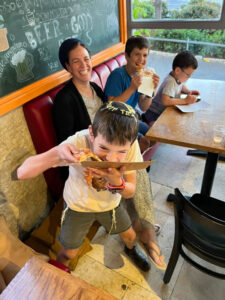
- The Friday beach morning. An invite to join the other families, most of whom have nobody in the army right now.
- Time to herself. “We’re taking our kids out this afternoon. Send yours along and take a couple of hours for yourself.”
- A seat at the community event. “Half the neighborhood is going to the wine tasting Thursday. We’ll save you a seat.”
- Weekday coffee. “I know you’re working from home today. Let’s catch up.”
- A ride to the simcha. Bar and bat mitzvahs are hard to attend alone. “We’ll pick you up, sit with us” changes the whole night.
Each invitation tells her she’s still one of the group, the same friend she was before the call-up.
The loneliness
Of everything we talked about that day, loneliness came up the most.
It hides inside a full day. A miluim wife is surrounded by coworkers, WhatsApp groups and neighbors, and when the day ends there’s nobody to tell about it. It shows up when the couples’ plans quietly stop including her. It shows up when her friends’ hard weeks end with a husband walking through the door, while hers comes with a fear she can’t explain at pickup. One quiet evening is fine. Fifty in a row wear a person down.
Three years into the war, much of the early wave of help has faded. The challenges have stayed. Every new call-up restarts the clock for the woman at home. We wrote more about that in Summer Is Not a Break for Reservist Families.
How you can help
Start this week. Think of one miluim wife you know, and call her on a weekday. Skip the questions about how he’s doing and invite her somewhere. Then do it again next month, and the month after that.
Smiles for the Kids has supported Israeli soldiers and their families since before October 7, and since the war began we have delivered more than $2 million in support to soldiers, their families, displaced families and communities across Israel. Our 2027 reintegration campaign helps reservists and their families reconnect after service.
Support our 2027 reintegration campaign. To learn more, or to share feedback, email aron@smilesforthekids.com or visit smilesforthekids.com.