
My Seder was peaceful. Hers was a phone call from the border.
Our Seder the other night was beautiful.
The table was set. The kids were dressed up. The matzah was covered, the wine was poured, the Haggadot were stacked in a pile by the salt water. My youngest stood on her chair and sang the Ma Nishtana the way she has every year since she learned the words. My wife and I looked at each other across the table the way parents do when everything, for one evening, feels exactly the way it should.
No sirens. No shelter runs. No phones buzzing with red alerts. Just candles, family, and the story we have been telling for thousands of years.
For a few hours, the war did not exist in our living room.
I sat there and felt something close to peace. And then I felt something else. Guilt. Because I knew that at that exact moment, at tables all over this country, the scene looked nothing like ours.
The Phone Call That Lasted Two Minutes
Friday night, friends came for Shabbat dinner. Good food, good company, the kind of evening you hold onto during weeks like these.
Their daughter was drafted the same day I was. Same intake. Same moment of walking through those gates and becoming something new. But while I was home that night, sitting at my own table with my kids on my lap, she was sitting on the Lebanon-Syria border.
She had been working nonstop since the start of the war. No breaks. No leave. Her family got a phone call from her before Pesach that lasted barely two minutes. Just enough time to say Chag Sameach. Just enough time for her parents to hear her voice and know she was alive.
Two minutes.
Her parents sat at our table Friday night and talked about her the way all parents talk about a child in danger. With pride that covers the fear. With faith that masks the helplessness. With a quiet hope wrapped around the one piece of information that keeps them going: she might have a day or two off coming up. Her first real break since this started.
Might.
I looked at my own kids running between the living room and the kitchen. I thought about this young woman on a border that most people cannot find on a map, doing work that most people will never understand, and her only comfort being the possibility of 48 hours at home.
And I thought about what it means that my Seder was peaceful while hers was a two-minute phone call from a staging area.
The Tables That Were Not Like Ours
Sarit Mason of Kibbutz Kramim sat at her Seder table with three children and an empty chair. Her husband Eliav was in Lebanon for his fifth round of reserve duty. Over 200 days served since October 7. The kids keep asking when he is coming back. She does not have an answer.
Shimon from Kiryat Melachi made it home for the Seder. He walked through the door, sat at the table, read the Haggadah with his family, and put the kids to bed. By the time they woke up the next morning, he was gone. Back to Gaza. His children did not get to say goodbye. They came downstairs and his chair was empty again, the Haggadah still open where he left it.
These are not unusual stories. They are the majority.
The IDF extended reserve duty from six weeks to nine weeks for 2026. One hundred thousand reservists were mobilized on March 1, on top of fifty thousand already serving. Hezbollah fired over fifty rockets at northern Israel during the first day of Pesach alone, sending hundreds of thousands of people into shelters.
Behind every one of those numbers is a kitchen table where someone did Pesach prep alone. A bedtime where someone answered questions they could not answer. A phone that rang at odd hours, or worse, did not ring at all.
The Door We Opened
At the end of our Seder, we opened the door for Eliyahu HaNavi.
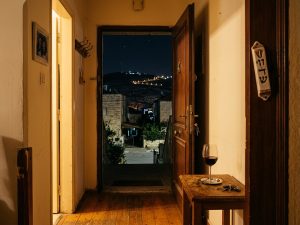
We poured the cup. The kids crowded the doorway. The night air came in. My youngest watched the wine to see if it moved.
Eliyahu HaNavi protects the Jewish people from the unseen. He comes to announce redemption. He comes to signal that someone is watching over us, even when we cannot see it.
Our friend’s daughter on the Lebanon-Syria border was doing exactly that. Eliav Mason in Lebanon was doing that. Shimon, already back in Gaza before his kids woke up, was doing that. Every reservist who missed the Seder, who ate matzah out of a cardboard box in a staging area, who called home for two minutes and then went back to work, was doing that.
They are our Eliyahu. They are standing between their families and the missiles. Between their children and the sirens. Between the Seder table and everything trying to reach it.
My Seder was beautiful because theirs was not.
I keep thinking about that Friday night dinner. About our friends sitting at our table, talking about their daughter the way you talk about someone you love who is somewhere you cannot reach.
She might get a day or two off. Might. That word carries the weight of the entire war for her family.
My Seder was peaceful. I had no worries in the world that night. My kids were safe, my wife was next to me, and the candles burned all the way down.
But someone else’s daughter made that possible. Someone else’s husband. Someone else’s father.
They are our Eliyahu. And the least we can do is make sure their families have a table worth coming home to.
Pour the cup for them.