
He’s been home since the war started. Present and distant at the same time. Then the call-up was announced, and I watched the distance win.
He’s been working from home since the war escalated. Laptop on the kitchen table. Coffee going cold next to the keyboard. The kids climbing on him between meetings. On paper, it looks like the kind of setup most families would want. Dad is home. Dad is here. Dad walks the kids to school and picks them up and sits on the floor building Lego towers and reads bedtime stories and is physically, fully, in the house.
But I’ve learned what “here” actually looks like when your husband is a reservist during wartime.
Here means one eye on the kids and one eye on the phone. Here means stepping out of the room mid-sentence to check a message from the group chat. Here means sitting on the couch with our youngest in his lap while his thumb scrolls through updates from guys who are already deployed. Here means family dinner where he laughs at something the kids say and then goes quiet for ten seconds too long because a notification just came through.
He’s present. He’s also somewhere else entirely.
The strange thing is, the family time has been real. More real than any stretch I can remember. He’s been here for breakfasts and bath times and homework and the fights between siblings and the late-night conversations after the kids go down. We’ve had him in a way we didn’t have him during his three deployments since October 7th. Seventy-five days of service. Weeks of empty chairs and solo parenting and phone calls where the kids pressed their faces to the screen trying to get closer to a father who was sleeping in a tent on the Gaza border.
So now he’s home. And I should feel relief. And I do.
But I also watch him.
I watch him check the phone at 6 AM before the kids are up. I watch him type long messages to his friends in other units and then delete them and retype them. I watch him step onto the balcony to make calls he doesn’t want the kids to overhear. I watch him come back inside and smile at me like nothing happened, and I smile back, and we both pretend.
Then the call-up was announced. Thousands of reservists heading North. The operation to finish what should have been finished long ago. And I watched it land on him in real time, sitting across from me at the kitchen table, the laptop still open, the cursor blinking on a half-written email he would never finish that day.
He didn’t say anything. He didn’t have to.
Two weeks before Passover.
His own unit wasn’t called. But another unit was, and they need more men. Friends of his. Guys he trained with. Guys he served alongside during previous deployments who transferred or got attached to this unit months ago because they couldn’t sit still. They wanted to keep serving. Now they’re mobilizing, and the word went out that they have room and need experienced reservists to fill the ranks.
He has the opportunity to join them. Nobody ordered him to. Nobody will punish him if he stays. That almost makes it worse. Because now the decision sits entirely on his shoulders, and on mine, and on this kitchen table between us.
The last few weeks have been hard even with him here. The sirens have become part of our routine in a way that should terrify me more than it does. I have the shelter math memorized. Ninety seconds from the kitchen. Forty-five from the bedroom if I carry the little one. I know which shoes to grab. I know which bag has the water and the phone chargers and the activity books that keep the kids quiet when we’re sitting on the floor waiting for the boom.
He’s been here for all of it. Standing in the shelter with us, counting heads, checking the ceiling like somehow his presence makes the concrete stronger. And it does. For the kids, it does. They look at him and feel safe. They climb into his lap and press their faces into his chest and wait for him to say “all clear” like it’s a magic phrase that makes the world outside stop falling apart.
But I see what they don’t see. The way he flinches when his phone buzzes. The late-night conversations with guys from the unit that he thinks I can’t hear through the bedroom wall. The duffel bag in the back of the closet that he hasn’t touched but hasn’t moved either.
He wants to go.
I know this the way I know his breathing pattern when he’s pretending to sleep. He lies there in the dark running scenarios, and I lie there reading every thought off the rhythm of his exhales.
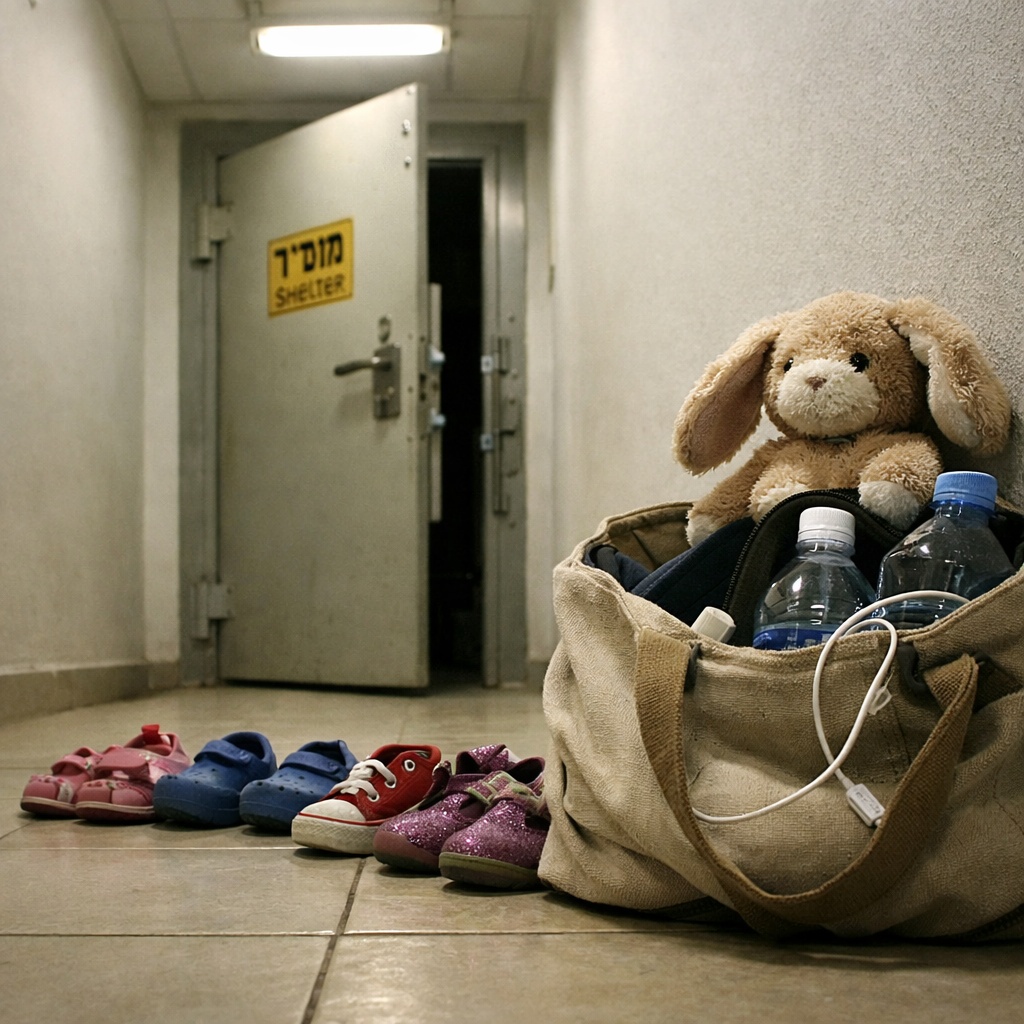
The past few weeks have gotten worse. The rockets are more frequent. The school schedule is chaos. One day they go, one day they don’t. The kids carry it in ways that break me. My oldest has started asking, every morning before he opens his eyes, if there were sirens while he slept. My youngest won’t go to the bathroom alone because she’s afraid the alarm will sound and she’ll be too far from the shelter.
And through all of this, my husband is splitting in half.
He tells me about the guys who are already heading North. One of them packed his bag while his six-year-old daughter watched. Another volunteered even though his wife is seven months pregnant. They’re all part of this unit that needs him, and he tells me their stories with a voice full of pride and guilt and longing. A pain that has nothing to do with me and everything to do with me at the same time.
They asked him to come. Not the army. His friends. The guys in the trenches who know what he can do and want him beside them. That kind of ask is harder to refuse than any official order.
I carry my own math. The kind no one teaches you.
If he goes, I manage the shelters alone. I carry the kids in the dark. I run the Seder by myself and explain to three small faces why Abba’s chair is empty and no, I don’t know exactly when he’s coming back. I absorb their fear without showing mine. I become the only wall between them and everything outside.
If he stays, I live with the version of him that’s here but not here. The one who answers the kids but keeps one ear on the group chat. The one who says he’s fine but can’t stop watching the news. The one who feels like he’s failing his brothers every hour he spends in this apartment instead of on a base.
There’s no version of this that doesn’t cost something.
I used to think the hardest part was the goodbye. The moment he actually walks out the door with the bag over his shoulder and the kids don’t fully understand why Abba is leaving. I’ve lived through that goodbye before. Three deployments since October 7th. Seventy-five days of service. I know what that door closing sounds like.
But this is harder. The in-between. The not-knowing. Watching him sit at dinner with us while part of him is already somewhere near the Lebanese border, checking gear he hasn’t been issued yet. Having all the family time in the world and still feeling him slip away message by message, update by update, name by name on the group chat.
We’ve had the best weeks and the worst weeks at the same time. The mornings where he makes pancakes and dances with the kids in the kitchen, and then his phone vibrates and his eyes change and I lose him for an hour even though he never leaves the room.
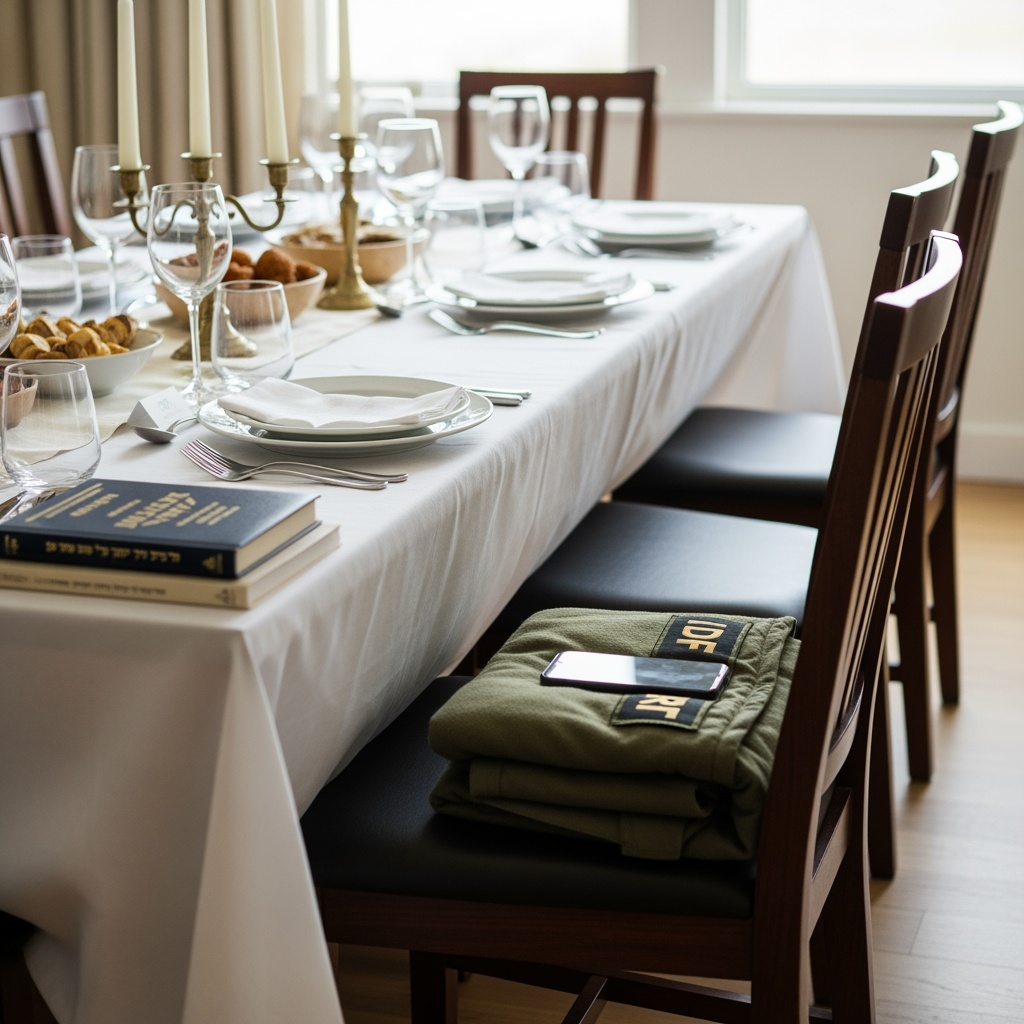
Passover is in two weeks. I’ve started preparing. The shopping lists, the cleaning, the menus. Normal things. The kind of tasks that trick your hands into thinking life is operating on a schedule. But every time I set the table in my mind, I don’t know how many chairs to count.
The Haggadah says every generation must see itself as if it personally left Egypt. I think about that differently now. Because leaving isn’t the only sacrifice. Staying is a sacrifice too. And watching someone you love stand at the door, torn between the family and the fight, is its own kind of exodus.
The kids will ask the Four Questions. I want him across the table when they do. I want him to open the door for Eliyahu. I want one night, just one night, where the phone doesn’t buzz and the sirens don’t sound and we sit together in the candlelight and talk about freedom like it belongs to us.
I also know what it costs him to stay. I see it. I see the weight of it pressing on his chest every time another name shows up on the group chat. Every time he hears about families being taken care of while their fathers are deployed. He wants to be the one out there. The one on the bus. The one standing next to the guys who asked for him by name. And I want that for him too, even though wanting it terrifies me.
We both want both sides. Nobody prepares you for that.
I want him home and I want him serving. He wants to be at the table and on the base. The kids want their father and their country wants their father and there is no solution that doesn’t leave someone reaching across a gap.
The phone keeps buzzing on the kitchen table. The laptop is still open. The kids are in the other room, and for now, he’s still here. Building Lego towers. Checking his phone. Holding two lives in the same pair of hands.
Am Yisrael Chai.