11 sirens in 24 hours.
Every two hours over Shabbat, including the middle of the night, our phones screamed and the sirens followed. We ran. We gathered. We waited. And then we went back to what we were doing.
And we had an incredible Shabbat.
That sentence is the story of life here right now. The two halves of it do not cancel each other out. They coexist, every single day, in ways I still do not fully have words for.
The Meals
We had guests for both Friday night dinner and Shabbat lunch. Real meals, full tables, wine poured, food passed around, laughter. The kind of Shabbat that reminds you why you made aliyah.
We also spent time at both meals sitting in our mamad.

That is just how it works. The siren goes off, you pick up your plates or you leave them, you move to the bomb shelter, you wait, you listen, and then you come back. Sometimes mid-sentence. Sometimes mid-bite. The conversation continues. The food gets cold. Nobody stops smiling.
Our guests did not flinch. Our kids did not panic. This is not bravery in the dramatic sense. It is just what life looks like here in 2025 and into 2026, and everyone at the table has adapted to it in ways we probably did not even notice we were doing.
The Yeshiva Boy
We had a young yeshiva bochur staying with us for Shabbat. He needed a break from yeshiva, just a real Shabbat, a home-cooked meal, some space to breathe.
What he got was all of that, and also more than an hour in our mamad in the middle of the night.
The siren went off late Friday night. We all shuffled into the shelter together, groggy and barefoot, and we ended up sitting in there for over an hour. There was nowhere to go. So we talked. Really talked. About the war, about his family, about what it means to be here right now, about what he was carrying, about what we were carrying.
An hour and fifteen minutes in a bomb shelter at midnight, and by the end of it this young man felt like family.
We are still in touch. He is coming back. Some of the most real human connections being formed right now in this country are happening in mamadim, in the spaces between alerts, in the quiet after the boom. I do not think that is a coincidence.
The Kids
Our kids had the classic Shabbat argument, kids debating whose house to go to for playdates in the afternoon.
The twist was the deciding factor: everyone wanted to go to the house with the best mamad.
Not the best snacks. Not the biggest yard. The mamad.
That is what childhood looks like here right now. Our kids are not traumatized. They are adapted. They have internalized a calculus that no child should have to know, and they do it naturally, almost cheerfully, because this is simply the world they are growing up in.
I watch them and I feel two things simultaneously: pride and a deep ache. Both are true at the same time.
Even Davening Changed
Our shul moved the prayer times up.
Not for the convenience of the congregation. Because if a siren goes off mid-tefillah, this way services would still finish on time. That is the level of planning and adaptation that has become routine here. Nothing is left to chance. Even Shabbat davening is coordinated around missile trajectories.
And the minyan was full. People showed up. They prayed. They said Kaddish. They shook hands at the end and wished each other Shabbat Shalom.
Motzei Shabbat
Shabbat ended.
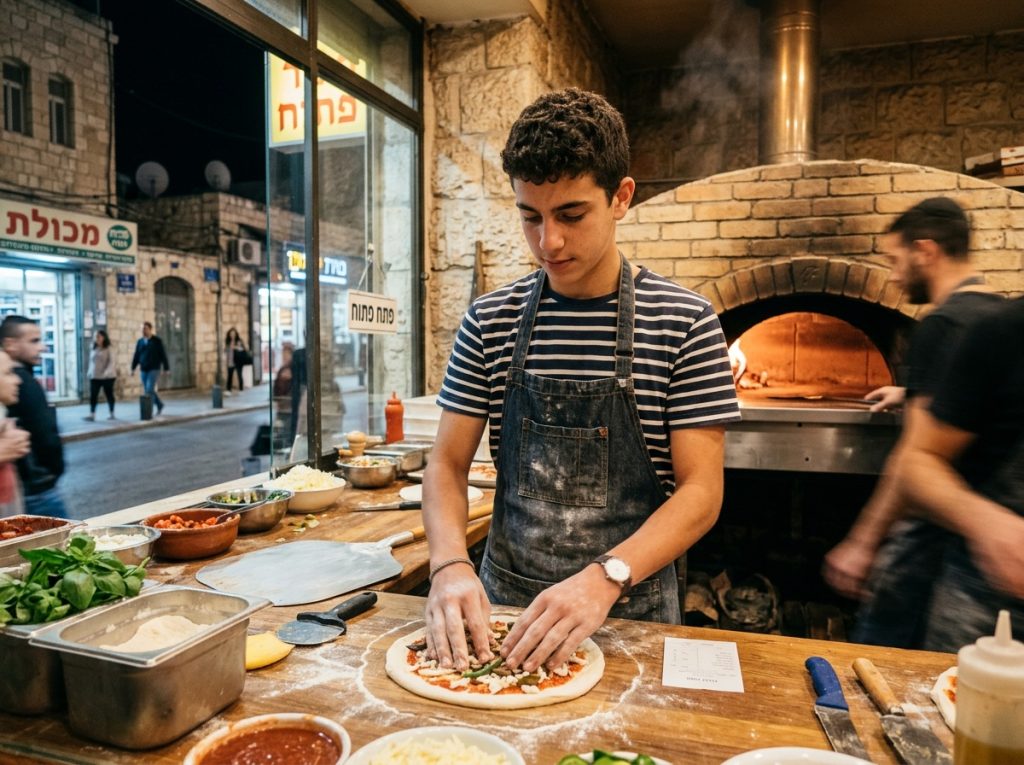
My son went to his job at the pizza store. Normal shift, normal night. My daughter went out with her friends for ice cream.
I sat at the kitchen table and thought about what we had just lived through in the previous 25 hours. Eleven sirens. Two meals interrupted by the mamad. An hour-plus in a shelter with a young man who is now part of our story. Kids debating shelter quality like it was a real estate selling point. Prayer times adjusted for incoming missiles. And then Shabbat ends, and my kids go out into the night like teenagers in any normal country.
This is the split life. This is the weirdness of this war.
We are not surviving. We are living. Fully, intentionally, stubbornly.
Why This Matters to Smiles for the Kids
I share this because this is the reality that Smiles for the Kids was built to support.
The families we serve are living this same split life, except many of them are doing it without the person who would normally sit at the head of that Shabbat table. Their husbands and fathers are deployed. The chair is empty. The sirens still go off every two hours. The kids still need to go to a mamad. And the wife is managing all of it alone, every single night.
When we deliver meals to these families, we are not just solving a logistical problem. We are saying: you are not invisible. We see what you are holding. And we want to take one thing off your plate, literally, so you have a little more energy to hold the rest.
One meal. Delivered directly. 100% of every dollar reaching the family, nothing skimmed, nothing lost.
Our Meals for Families program currently supports around 300 families every month. The need is only growing. Operation Roaring Lion has called up tens of thousands of additional reservists, which means tens of thousands more families now managing Shabbat, Pesach preparations, school pickups, and bomb shelter logistics with one less adult in the house.
We are here. We are boots on the ground. And we are keeping the table full for the families whose table suddenly got a lot harder to manage.
If you want to be part of this, every contribution goes directly to a family. No overhead. No middleman. Just help, delivered.
Am Yisrael Chai.